Research Project

Philosophical Foundations ofCommunication and Care fora Trust Society

From an Angry Society to a Trust Society

Communication · Solidarity · Welfare

How can trust become possible again in a society where anger has become daily? This research is a seven-year attempt to answer that question.

Korean society is passing through a deep crisis of trust. The spread of digital media, political polarization, and widening generational, class, and gender gaps are gradually weakening communal bonds. Anger amplified within anonymity erodes even the possibility of civil dialogue. This research diagnoses the phenomena of this society of anger through a philosophical lens and explores the philosophical foundations required for the transition to a trust society.

The project unfolds along three major axes. First, Philosophy of Communication proposes a dialogic ethic that moves beyond the language of anger and disconnection toward mutual understanding. Second, Philosophy of Solidarity examines how justice and love can operate within the terrain of contemporary conflict. Third, Philosophy of Welfare asks about the possibility of care tailored to individual particularity, beyond mere distribution.

Across seven years of staged research, the team aims to propose practical alternatives for building a trust society, beginning from the diagnosis of a society of anger. Annual outputs will be shared through scholarly papers and books, ultimately laying the philosophical foundation — the ethical basis of living together — that our time demands.
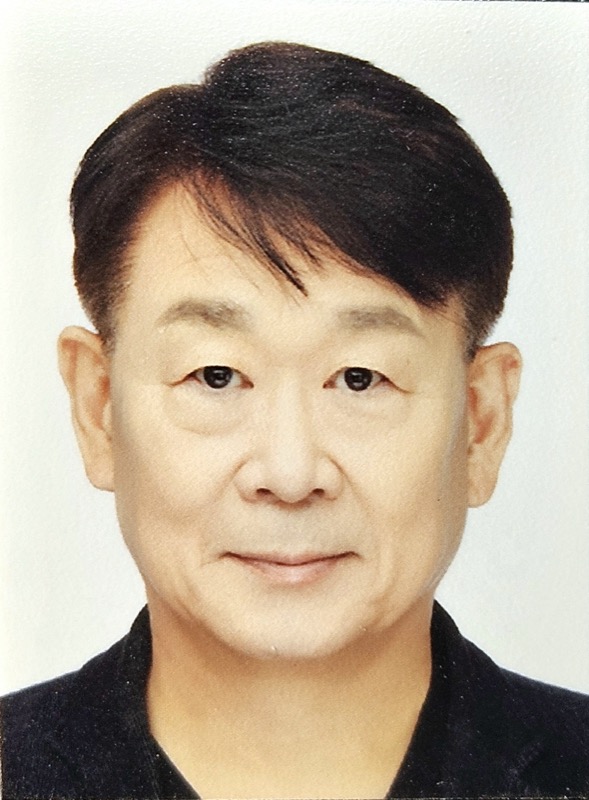
Principal Investigator
Maeng Joo-man맹주만
Professor, Department of Philosophy, Chung-Ang University

An at-a-glance summary of the research program funded by the National Research Foundation of Korea under the Humanities & Social Sciences Research Institute Support Program.

Title
Philosophical Foundations of Communication and Care for a Trust Society — From a Society of Anger to a Trust Society: Communication, Solidarity, and Welfare
Subtitle
From an Angry Society to a Trust Society — Communication, Solidarity, Welfare
Type
NRF Humanities & Social Sciences Research Institute Support Program
Pure Academic Research Type|Papers / Books
Period
2023.09 2029.08
Phase 1 · 3 yrs|Phase 2 · 4 yrs
Budget
15.6billion KRW·total 7 yrs
+ 1.56억 contribution fund (10%)
Principal Investigator
Prof. Maeng Joo-man맹주만
Chung-Ang University · Western Philosophy · Ethics
Research Team
12members
· 1 PI· 4 Co-Investigators· 4 Full-time Researchers· 3 Research Assistants
Target Outputs
8 KCI-indexed papers / year · 2 academic conferences / year · 2 colloquia / year · 5 institute monograph series · 1 final book

From diagnosing a society of anger
to the philosophical foundations of a trust society

This research aims to diagnose the conflicts of our time and to lay the philosophical groundwork for restoring trust and rebuilding social bonds.

Three axes — communication, solidarity, welfare — uphold this work.

FROMAngry SocietyDisconnectionAnonymityAngerErosion of publicnessTHREE PHILOSOPHICAL AXESICommunicationIISolidarityIIIWelfareTOTrust SocietyDialogueJusticeCareCommunityCommunication · Solidarity · Welfare
Figure 1. Three philosophical axes mediate the transition from anger to trust.
I

Philosophy of Communication

소통의 철학

Beyond the language of anger and disconnection, we seek a dialogic ethic of mutual understanding.

Society of Anger → Trust Society
Keywords
  • Digital illiteracy
  • Dialogic ethics
  • Authority & anonymity
  • Erosion of publicness
II

Philosophy of Solidarity

연대의 철학

We examine how justice and love operate across the terrain of contemporary conflicts.

Solidarity · Justice · Love
Keywords
  • Gender & multicultural conflicts
  • Cosmopolitanism
  • Good community
  • Social minorities
III

Philosophy of Welfare

복지의 철학

We ask about the possibility of care tailored to individual particularity, beyond distribution.

Tailored care & welfare
Keywords
  • Simple·complex·multi-level equality
  • Self-trust
  • Individuated care
  • Welfare philosophy

A staged seven-year voyage of research

Phase 1 (2023.09 — 2026.02, 3 years) and Phase 2 (2026.03 — 2029.08, 4 years). Each year carries a defined goal and keywords.

  1. 01Phase 1 · '23.09 — '24.02
    Conceptual frame
    Just anger · out-group
  2. 02Phase 1 · '24.03 — '25.02
    Communication
    Digital illiteracy · ethics
  3. 03Phase 1 · '25.03 — '26.02
    → Solidarity
    Gender · multicultural
  4. 04Phase 2 · '26.03 — '27.02
    Solidarity · Justice
    Forgiveness · politics
  5. 05Phase 2 · '27.03 — '28.02
    → Welfare
    Freedom · self-trust
  6. 06Phase 2 · '28.03 — '29.02
    Tailored care
    Multi-level equality
  7. 07Phase 2 · '29.03 — '29.08
    Synthesis
    Individuated care · book
Figure 2. Seven-year roadmap structured in two phases.
Team

Research Team

12
members
Maeng Joo-man
Principal Investigator

Maeng Joo-man

맹주만
Department of Philosophy, Chung-Ang University
Director of the project. Responsible for the overall ethics of reason, empathy, and welfare philosophy.
Co-Investigators· 4
Ahn Jae-ho
안재호
Chinese Philosophy
Lee Jae-ho
이재호
Anglo-American Metaphysics
Hyeongjoo Kim
김형주
인공지능 철학
Jeong Ji-hoon
정지훈
European Continental Philosophy
Full-time Researchers· 4
Kim Bun-seon
김분선
Kim Eun-mi
김은미
Yoon Eun-joo
윤은주
Kwon Hee-jin
권희진
Research Assistants· 3

Three M.A. candidates participate as research assistants and are trained as the next generation of scholars.